When Ahold, the parent company of Albert Heijn, approached us, the stakes were high. With over 1,056 stores and a dominant market position in the Netherlands and internationally, they didn't just need a refresh; they needed a revolution. As a premier retail design agency in Sweden, Blink is often the first port of call for major European brands looking to infuse their spaces with that elusive Nordic functionality and aesthetic clarity.
Albert Heijn is an institution in the grocery world. However, even giants need agility. They recognized that the traditional binary model of their stores — either a tiny "To Go" shop or a massive, sprawling supermarket — was leaving a gap in the market. They approached our team of Scandinavian retail design experts to bridge this divide, leveraging our reputation for creating spaces that don't just look good but perform exceptionally well in high-traffic urban environments.


The fundamental problem was a clash of customer expectations. In a bustling city center, the same customer often wears two different hats in a single day. At 8:00 AM, they are a rusher, needing coffee and a croissant in under thirty seconds. At 6:00 PM, they are a provider, looking for fresh ingredients for a family meal.
The existing store formats forced a compromise. Convenience stores lacked the fresh variety needed for dinner, while traditional supermarkets were too sluggish for the morning rush. Customers were frustrated by navigating endless aisles of detergent just to find a sandwich. The challenge for us as a European retail design studio was to stop treating these as separate demographics and start treating them as a singular, hybrid need state. We faced declining engagement in the center-store aisles and a desperate need to streamline category navigation without sacrificing the perception of abundance.
Before putting pen to sketchpad, Blink deployed our strategy team to dissect the daily rhythms of the Dutch consumer. We didn't just look at sales data; we looked at human behavior. As store interior design specialists, we know that data tells you what sold, but observation tells you why (or why not).

Our research revealed a massive cognitive load regarding the question, "What’s for dinner?" Customers didn't necessarily want a frozen meal, but they didn't have the mental energy to curate a recipe from scratch. They wanted a middle ground — customizable but curated.
Traditional supermarket layouts were creating bottlenecks. The high-velocity shoppers were getting stuck behind the slow-browsing weekly shoppers. Mixing these two flows was creating a negative experience for both.
While Albert Heijn had a robust app, it felt like a separate entity from the physical store. The digital and physical touchpoints weren't shaking hands; they were barely waving at each other from across the street.
Our strategy was bold: stop thinking about a supermarket and start thinking about a "food service hub." We proposed a hybrid concept that fused the speed of a bodega with the depth of a full-service grocer.
This approach required a rethinking of the standard retail concept design in the Nordics. Usually, we push for minimalism, but here we needed abundance on demand. The strategy hinged on "Component Cooking"—a modular approach to meal prep that allows customers to buy pre-prepped elements (steamed veggies, marinated proteins, sauces) to build a meal in minutes rather than hours.
We decided to flip the traditional layout on its head. Instead of burying the fresh food at the back to force impulse buys, we brought the "gastronomy" to the front. We utilized our expertise as a retail design agency in Sweden to champion a philosophy where efficiency creates luxury. If the customer feels smart and fast, they feel good.


Zone 1 - The High-Speed Lane. The immediate entrance is dedicated to "Now." Sushi, sandwiches, and instant hydration. The flooring here is durable, creating a fast-track visual cue.
Zone 2 - The Component Kitchen. Moving deeper, the customer encounters the "Tonight" zone. This is where the component cooking innovation lives.
Zone 3 - The Pantry. The dry goods and household items are pushed to the rear, available for those who need them but out of the way of the dash-and-go crowd.
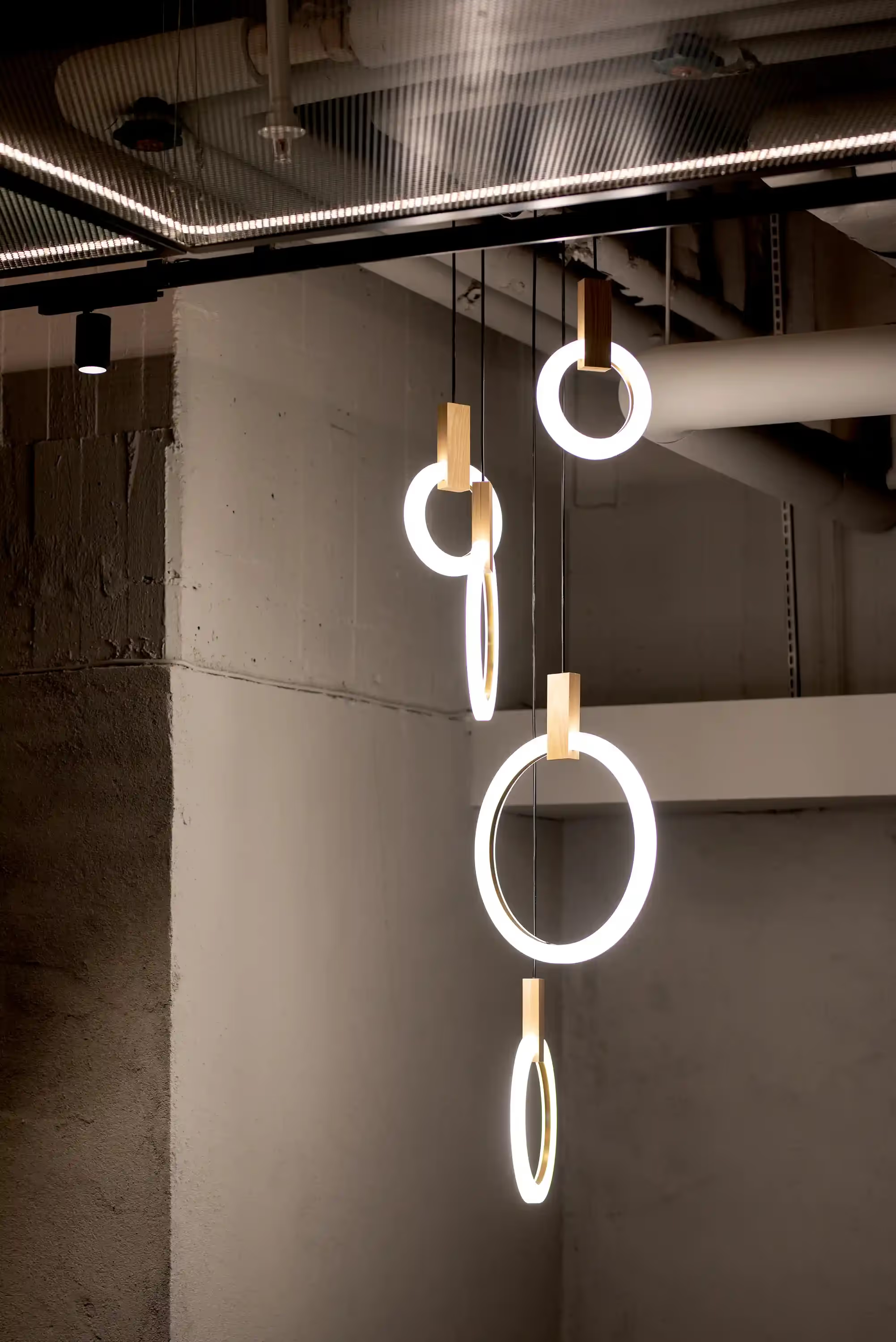
We avoided the sterile, clinical white light often found in grocery retail. We utilized warm, localized lighting to create "stages" for the food. We used sustainable light wood textures and matte black metal fixtures to ground the space, making the colorful produce pop. It feels less like a warehouse and more like a covered market.
We stripped back the noise. Traditional supermarkets scream at you with discounts. We whispered with clarity. Large, typographic navigational cues help customers orient themselves instantly. The signage focuses on "meal solutions" rather than "product categories."
We integrated the omnichannel experience directly into the shelf edge. Electronic shelf labels (ESLs) connect with the app, highlighting personal offers or dietary flags (like gluten-free or vegan) as the customer walks by. We also integrated pre-order pickup lockers at the front, allowing the app to serve as a remote control for the physical store.
Rolling out a concept across an international footprint is never without hurdles. As a European retail design studio, we are used to navigating complex building regulations and varying footprint sizes.
One of the significant challenges was operationalizing the "fresh food" service. Designing a space for sushi chefs and pizza ovens within a compact city footprint required a Tetris-like mastery of spatial planning. We had to ensure that the ventilation and workflow didn't encroach on the retail floor.
Furthermore, convincing stakeholders to reduce the linear footage of high-margin dry goods to make room for the "experience zones" was a battle. However, by demonstrating that retail concept design in the Nordics prioritizes long-term brand loyalty over short-term shelf density, we secured the buy-in needed to maintain the integrity of the design.

The results were immediate. We saw a significant spike in transaction volume. Interestingly, the basket size grew even for the "convenience" shoppers because the "Component Cooking" solutions were too tempting to ignore. Sales are tracking significantly above expectations.
The app integration has seen massive adoption, with customers using the "list-to-path" feature to navigate the store efficiently.
By blending the warmth of Swedish design sensibilities with the pragmatic needs of the Dutch market, Blink successfully transformed a transactional grocery trip into an engaging food experience. This project stands as a testament to why we are the go-to retail design agency in Sweden for brands ready to future-proof their physical spaces.
richard@blinkthedesignagency.com
+46 73 545 5018
Blink is a leading retail design agency based in Sweden, specializing in retail concept development, store experience design, and omnichannel integration across the Nordics and Europe. We transform brands into physical destinations that drive both emotional connection and commercial performance.
.avif)