

Mornington Hotels isn’t just about providing a place to sleep; they are about curating a lifestyle. In the competitive landscape of Stockholm’s hospitality sector, they have carved a niche for travelers who appreciate character over cookie-cutter consistency. However, they faced a spatial conundrum at their city location.
They approached Blink, a premier retail design agency in Sweden, because they didn’t just want an interior decorator; they needed a partner who understood commercial strategy. They possessed a dormant asset—a historic coal cellar buried beneath the hotel—and a vision to monetize it. They needed Scandinavian retail design experts who could look past the dust and cobwebs to see a potential goldmine. Their goal was audacious: to build a gym that felt less like a fitness center and more like an exclusive underground speakeasy where you just happen to lift weights.


The primary problem was structural and atmospheric. How do you convince high-net-worth individuals and hotel guests to voluntarily descend into a windowless basement to work out? The space was originally designed to store coal, not to host Pilates sessions. It was dark, industrial, and raw—but not in the trendy way.
From a business perspective, the challenge was twofold. The hotel had prime square footage generating zero revenue. Stockholm is saturated with gyms. Mornington needed a "Blue Ocean" strategy—a facility that offered something the big commercial box gyms couldn't.
As a European retail design studio, we know that "retail" isn’t just about selling products; it’s about selling a feeling. The challenge was to package "sweat" as a luxury commodity. We had to turn the lack of natural light from a liability into a moody, atmospheric asset, creating a space that felt private rather than claustrophobic.
Before picking out swatches, we donned our detective hats. As store interior design specialists, we believe design without data is just art—and we are in the business of commerce. Through site audits and analyzing user journeys within the hotel, we uncovered three critical insights.

Our research into the target demographic (urban professionals and luxury travelers) revealed a fatigue with hyper-exposed, fluorescent-lit fitness centers. There was a craving for privacy. Users didn't want to be on display; they wanted a sanctuary. This validated the decision to keep the gym underground and exclusive, limiting the membership to a "Velvet Rope" cap.
We analyzed the architecture and realized that the building's soul was in its scars. Erasing the industrial history would be a crime. The market trends in retail concept design in the Nordics showed a shift towards authenticity. Customers trust brands that have a story. The coal cellar wasn't a problem to fix; it was a narrative to highlight.
We discovered a disconnect in typical hotel gyms: you work out, then you leave. We identified an opportunity to keep the guest in the "Mornington Ecosystem." By integrating a lounge and connecting the gym flow directly to the hotel’s dining services, we could increase dwell time and ancillary spend. The gym needed to be a social hub, not just a functional utility.
Our strategy was built on the concept of "The Polished Gritty". As a leading retail design agency in Sweden, we approached this project by applying retail psychology to a wellness space. We wanted to create high-contrast tension.
We decided to leave the industrial bones exposed—the concrete, the history, the weight of the building—and juxtapose them against hyper-luxurious materials. It’s the architectural equivalent of wearing a tuxedo with combat boots.
Unlike competitors who try to mimic daylight with fake windows and bright white walls, we leaned into the darkness. We treated the gym equipment not as machinery, but as sculpture within a gallery. The strategy was to create a "Third Place"—not quite home, not quite work—where members felt part of an inner circle. This approach positioned Mornington not just as a hotel with a gym, but as a lifestyle brand hosting a wellness club.


We reimagined the floor plan to support a capped membership of exactly 200 people. The layout is intimate yet spacious enough to avoid the "elbow-rubbing" awkwardness of standard gyms. We created zones: high-energy lift areas transitioning smoothly into secluded recovery nooks.
We selected materials that beg to be touched. We kept the raw, exposed concrete walls to honor the coal cellar’s past. To contrast this, we introduced Carrara marble—a material usually reserved for lobby bars, not locker rooms. We added custom metalwork that feels heavy and permanent, grounding the space.
Forget 5000K fluorescent tubes. We utilized sophisticated, warm LED lighting integrated into the joinery and metalwork. The lighting is theatrical, highlighting the texture of the stone and the sleek lines of the equipment, creating pockets of drama and intimacy.
We didn't just build a pretty cave; we built a smart one. We integrated custom streaming screens and digital interfaces for personalized training. This allows the user journey to bridge the physical and digital, a staple methodology for any modern European retail design studio.
We designed an exclusive lounge area with the same rigor as a boutique hotel bar. It features curated furniture and complimentary beverage stations. Crucially, the design creates a seamless physical pathway to the hotel’s wider hospitality services, encouraging members to grab breakfast or a post-workout meal upstairs.
By repurposing the existing subterranean structure, we significantly reduced the carbon footprint compared to a new build. We approached the equipment placement like visual merchandising—ensuring sightlines were clean and inviting, guiding the user through the workout visually.
Turning a coal cellar into a luxury club is as difficult as it sounds. As store interior design specialists, we are used to tight constraints, but this was next level.
The biggest challenge was infrastructure. Ventilation in a subterranean space is a nightmare, but essential for a gym (nobody wants to smell 100 years of coal mixed with yesterday's cardio). We had to route complex HVAC systems without ruining the aesthetic ceiling heights.
Furthermore, getting materials like heavy Carrara marble slabs and custom steel rigs down narrow, historic stairwells required logistical gymnastics. We managed the project with military precision, ensuring that the "Raw" elements remained authentic while the "Refined" elements were installed with white-glove perfection. It required close collaboration between our design team, structural engineers, and the Mornington stakeholders to ensure the vision wasn't compromised by the reality of the basement.
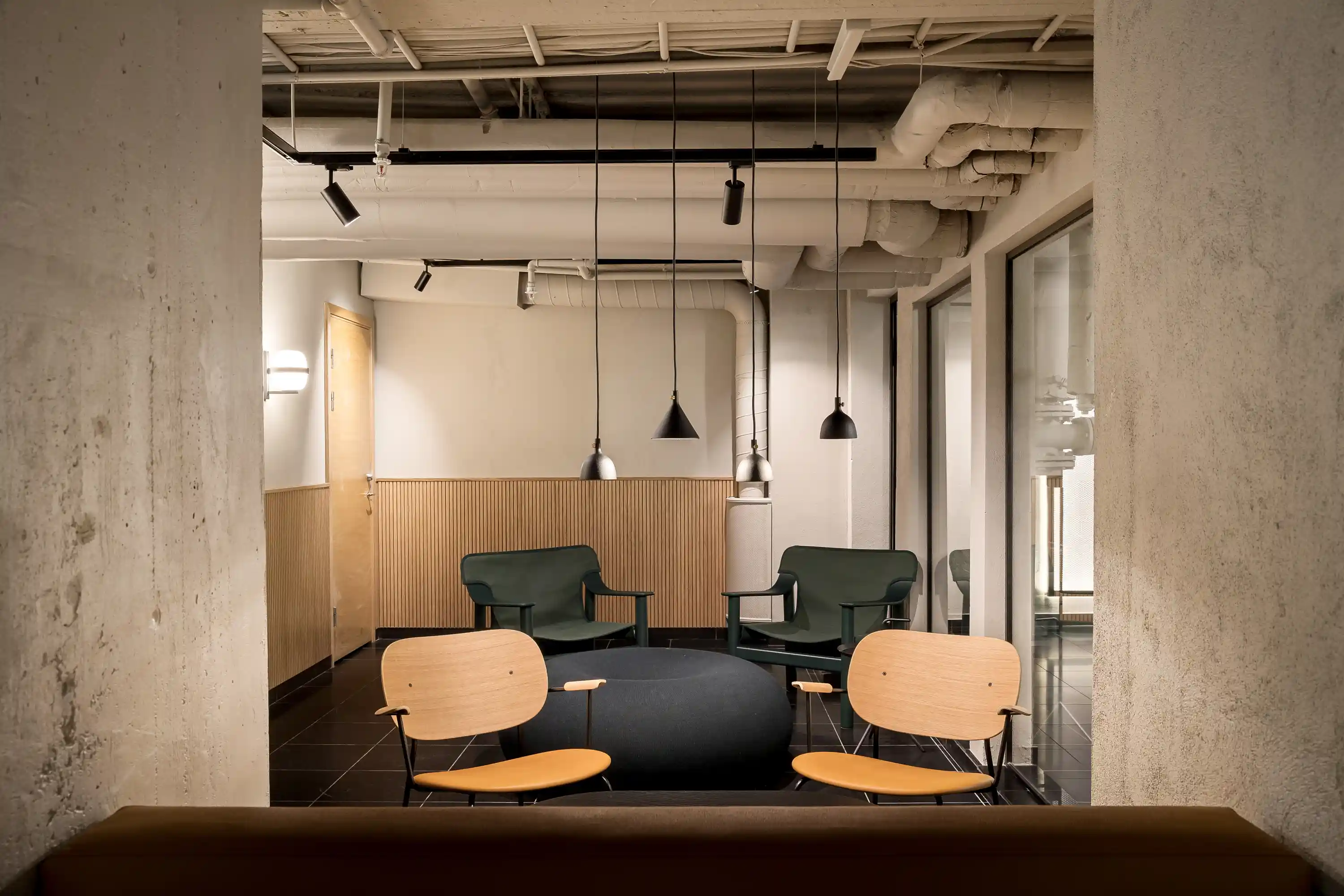
The transformation has been nothing short of spectacular. Blink, as a top retail design agency in Sweden, delivered a project that serves as a case study for ROI-driven design. The membership cap of 200 was reached rapidly, creating a waiting list that drives hype and desire (the ultimate luxury commodity). The gym has transformed a zero-revenue space into a significant monthly recurring revenue stream for the hotel.
Guest satisfaction scores regarding amenities have soared. The "Mornington City Health Club" has become a brand asset, elevating the perception of the entire hotel. It is no longer just a place to sleep; it is a destination for wellness. Mornington Hotels now boasts a unique selling proposition that competitors cannot easily replicate. The integration of retail concept design in the Nordics principles into a hospitality setting proved that when you design for the human experience, the business results follow naturally.
richard@blinkthedesignagency.com
+46 73 545 5018
Blink is a leading retail design agency based in Sweden, specializing in retail concept development, store experience design, and omnichannel integration across the Nordics and Europe. We transform brands into physical destinations that drive both emotional connection and commercial performance.


