

Stadium is a household name across Northern Europe, effectively the heavy hitter of the Scandinavian sports world. However, their off-price division, Stadium Outlet, was facing an identity crisis common in the discount sector. They weren’t struggling to sell products; they were struggling to sell a feeling.They approached Blink, known as Scandinavian retail design experts, because they realized their outlet locations felt less like a destination and more like a necessity. They operated in the "bargain bin" mentality—functional, but uninspired. They needed a partner who could look past the price tags and see the potential for a genuine brand movement. They didn't just want a facelift; they wanted a complete overhaul of how customers perceive value retail in the sports sector. As a leading European retail design studio, we were tasked with turning a warehouse full of boxes into a coherent, exciting retail concept.
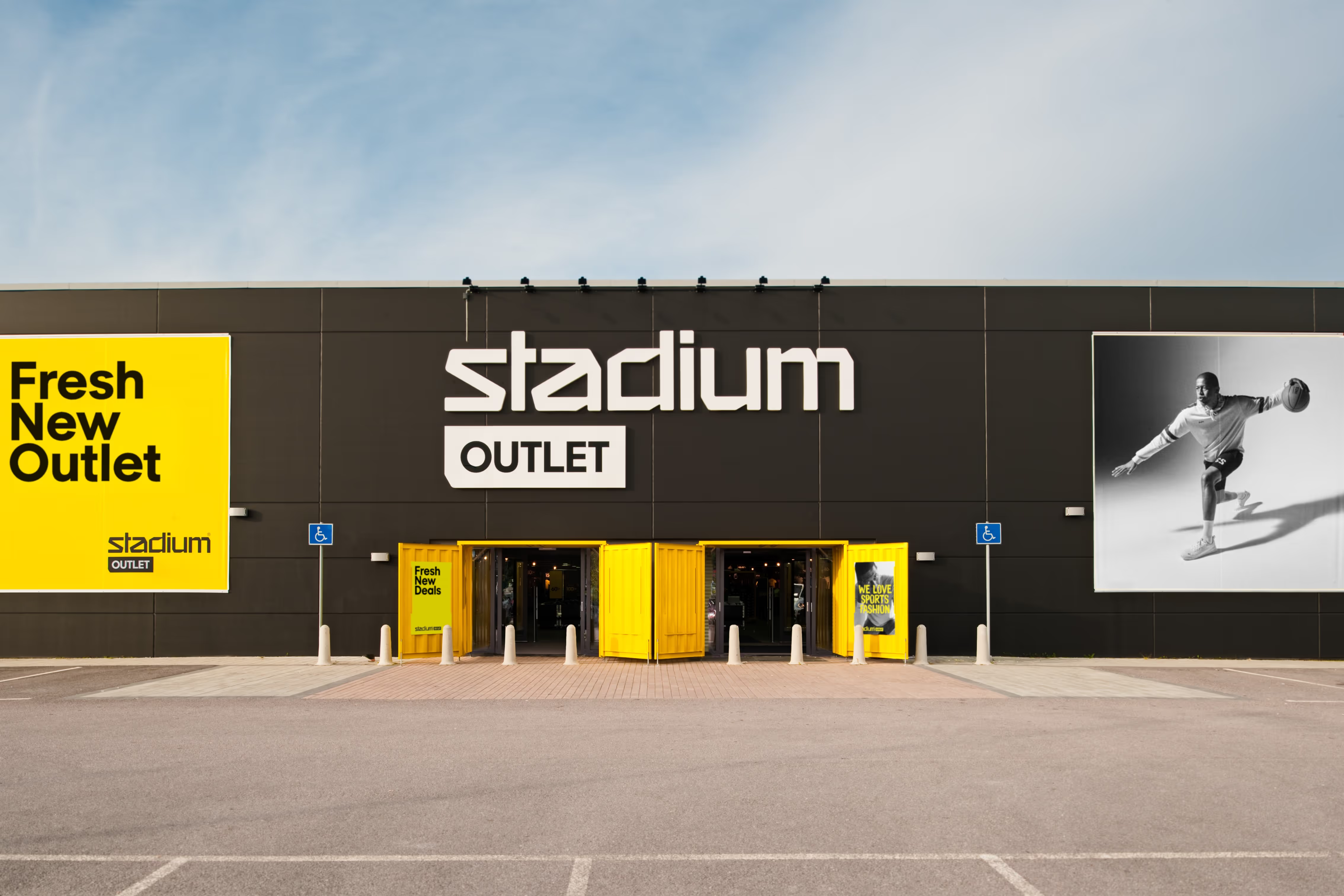

The core business problem was an optical one. In the world of retail, "outlet" often translates to "sad," "messy," or "leftover." The existing store format was apologetic. It seemed to say, "Sorry the lighting is bad, but hey, the shoes are cheap." This approach devalued the premium brands Stadium was selling.Our challenge was to strip away the apology. We needed to stop hiding the logistics and start celebrating them. The goal was to increase the perceived value of the merchandise without increasing the cost of the fit-out. We had to create a retail concept design in the Nordics that felt urgent and cool, rather than chaotic and cheap. The store needed to navigate a massive volume of stock—fast in, fast out—without overwhelming the shopper. We had to prove that low price doesn't have to mean low energy.
Uncovering the "why" behind purchase behavior via store interior design specialists. Before sketching a single layout, our team dug deep into the behavioral patterns of the modern bargain hunter. As store interior design specialists, we know that architecture influences psychology. We conducted store audits and mapped user journeys to arrive at three pivotal insights.
Shoppers in the outlet segment want to feel like they’ve “won” against the system by finding a gem. A sterilized, overly organized space kills that thrill. The environment needs to feel a little wild to make the discovery satisfying.
Shoppers in the outlet segment aren't looking for white-glove service; they are looking for a dopamine hit. They want to feel like they’ve “won” against the system by finding a gem. A sterilized, overly organized space kills that thrill. The environment needs to feel a little wild to make the discovery satisfying.
In traditional retail, the message is "We will be here forever." In outlet retail, the message must be "Buy it now, or it’s gone forever." Our research showed that the store environment was too static. It needed to feel temporary and kinetic, like a pop-up event that just landed, encouraging faster decision-making at the shelf edge.
Our strategy was to flip the script on traditional retail design. Instead of covering up the warehouse roots of the business, we decided to elevate them. We coined the concept "The Retail Rebel." This approach distinguishes us as a premier retail design agency in Sweden. While competitors were trying to polish the rough edges of discount stores, we sharpened them. We positioned Stadium Outlet not as a discount chain, but as a high-speed trading machine. The strategy was built on "Quality Access at Speed."
We decided to use the very tools of the supply chain—shipping containers, pallets, industrial racking—not as storage, but as the primary architectural language. This wasn't about being cheap; it was about being raw and honest. By embracing an industrial aesthetic, we could create a "clubhouse" vibe for sports enthusiasts who care more about performance gear than polite service. The strategy turned the volume up to eleven, shifting the tone from corporate and safe to gritty, urban, and unapologetic.

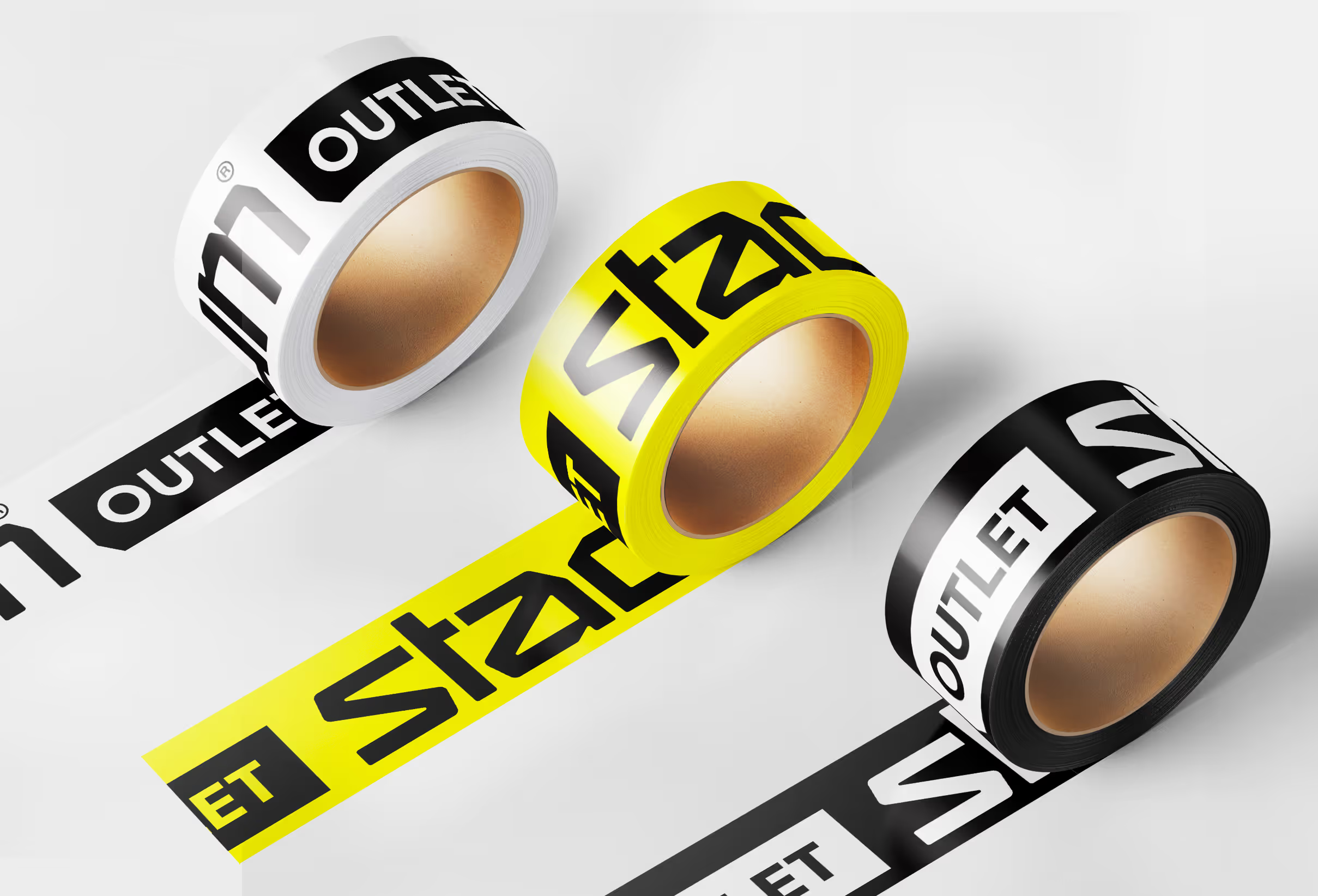
We executed the "Retail Rebel" concept through a rigorous application of industrial materials and high-voltage graphics. As Scandinavian retail design experts, we ensured the functionality remained high while the aesthetic became aggressive.
We introduced actual shipping containers into the store environment. These aren't just props; they are the anchors of the customer flow. They serve as "drop zones" for new arrivals, signaling to the customer that this merchandise just landed. It turns logistics into theater.
We utilized standard pallet racking as the primary architectural element. By keeping the racking exposed and proud, we achieved two things: we kept the CapEx (Capital Expenditure) incredibly efficient, and we communicated "insider access" to the shopper. The materials are cold steel, raw concrete, and wood—materials that can take a beating and look better for it.
We used high-contrast spotlights to create drama around the bulk stacks. The lighting makes the product pop and adds to the feeling of a "night market" or an exclusive event.
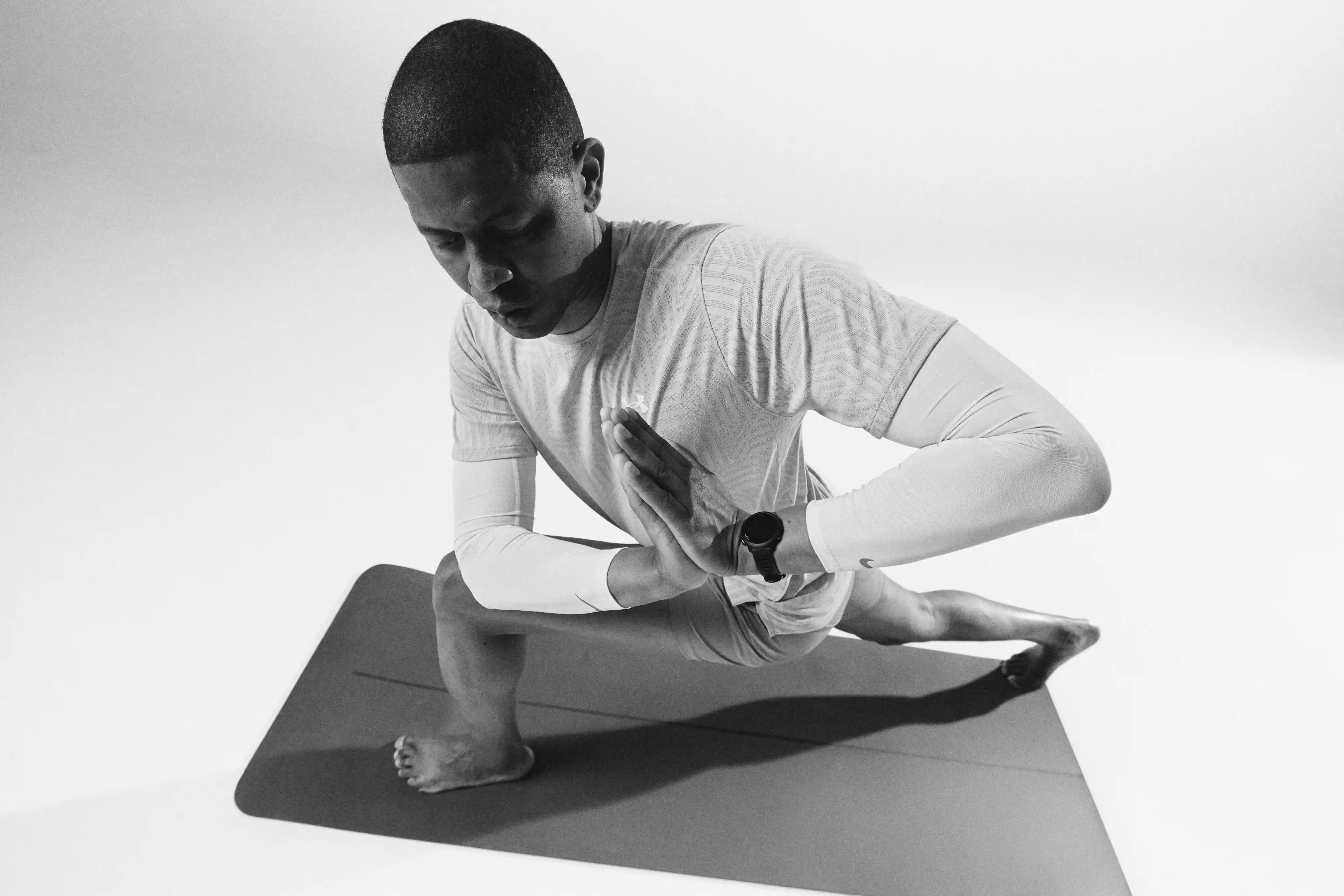
The visual communication is where the "Rebel" really speaks. Instead of "Sale 20% Off," the messaging is urgent: "Get it. Done. Gone." The graphics feature grainy, black-and-white photography that feels like news reportage rather than glossy advertising. It creates a brand voice that sounds like a coach or a teammate—direct, loud, and energetic.
Designing a flagship is one thing; designing a system that works across 55+ stores in three countries is where we prove our worth as a retail design agency in Sweden. The challenge was scalability. Stadium Outlet needed a "kit of parts" that could be deployed in a new build or a retrofitted space without losing the brand soul.
We created an implementation playbook that treated the store design like a Lego set. The containers, the racking, and the graphic layers are modular. This meant that local contractors in Finland or Norway could replicate the retail concept design in the Nordics perfectly without needing Blink designers on-site for every nail driven.
One hurdle was convincing the client to be comfortable with "imperfection." The taped-up graphics and exposed ceilings felt risky to stakeholders used to polished retail. However, through prototyping and 3D visualization, we proved that this "roughness" was actually a highly curated, premium form of design.
Carl Eklöf, CEO of Stadium Group, confirmed that this project represents their largest commercial success in recent years. By trusting store interior design specialists to reinvent their approach, they didn't just get a new look—they got a new engine for growth.
The transformation has been nothing short of spectacular. Stadium Outlet has evolved from a secondary revenue stream into the absolute star performer of the Stadium Group portfolio.
richard@blinkthedesignagency.com
+46 73 545 5018
Blink is a leading retail design agency based in Sweden, specializing in retail concept development, store experience design, and omnichannel integration across the Nordics and Europe. We transform brands into physical destinations that drive both emotional connection and commercial performance.

.avif)
